

A Vietnam group itinerary for 10–30 people works when you limit the trip to one base every 2–3 nights, book one vehicle with about 20–30% more seats than people, leave at 07:30–08:00, and add 30–45 minutes of buffer to every transfer. Below are three day-by-day routes of 5, 7 and 10 days.
Key facts (as of November 2026)
- A group of 10–14 fits one 16-seat minibus, 15–24 people need a 29-seat coach, and 25–30 people need a 45-seat coach once luggage is counted.
- As of mid-2026 the Bien Hoa–Vung Tau expressway only admits vehicles under 9 seats, so 16-, 29- and 45-seat coaches still take National Road 51 (QL51) and need 2.5–3 hours from Ho Chi Minh City to Vung Tau.
- The Greenlines DP ferry from Bach Dang terminal to Vung Tau takes about 2 hours and costs 320,000 VND per adult on weekdays and 350,000 VND at weekends, as of November 2026, with no group rate.
- Group villas in Vung Tau typically have 4–7 bedrooms and sleep 15–25 guests, at roughly 400,000–800,000 VND per person per night for groups of 10–20, as of October 2026, depending on the villa and the dates.
- Vietnam Airlines’ group-buying promotion, valid to 31 December 2026, discounts domestic economy fares by up to 25% for 8 or more passengers on one booking.
- The Cu Chi Tunnels (Ben Dinh site) open 07:00–17:00 and sit about 1.5–2 hours by road from District 1; the foreigner ticket is about 110,000–135,000 VND as of 2026.
- Tet 2027 falls on 6 February, with the public holiday running 4–10 February 2027; transport and villas cost more and sell out early around those dates.
Written by the King’s Villa team. Last updated November 18, 2026. Prices, timetables and road rules change; check the official sources listed at the end before you book.
What does a workable Vietnam group itinerary look like for 10–30 people?
A workable plan for a big group has few hotel changes, one main activity per day, and a named person responsible for each booking. Solo travelers can fit three stops into a morning. Thirty people cannot, because every stop adds a headcount, a toilet queue and a walk back to the coach. The three routes in this guide are built around that reality.
All three start in Ho Chi Minh City (Thành phố Hồ Chí Minh), still called Saigon (Sài Gòn) by almost everyone, and all three include Vung Tau (Vũng Tàu), the closest beach town to the city. Since 1 July 2025 the former Ba Ria–Vung Tau province has been part of Ho Chi Minh City on paper, but on the road it is still a separate trip of 100 km or so. Vung Tau suits groups because a single private villa can sleep the whole party, which turns the most awkward part of group travel, rooming, into one booking.
This article deals with the daily mechanics: vehicles, departure times, transfer lengths, luggage and tables for dinner. Visas, payment methods, safety and booking lead times are covered in our group trip planning checklist. The short version on visas: the e-visa is valid for up to 90 days and costs US$25 single entry or US$50 multiple entry as of November 2026, and several nationalities get a 45-day exemption, so ask everyone to check their own status early.
| Itinerary | Length | Bases | Hotel or villa changes | Best for |
|---|---|---|---|---|
| A: Saigon + Vung Tau villa weekend | 5 days / 4 nights | Saigon (2 nights), Vung Tau (2 nights) | 1 | Family reunions, company trips, first visits |
| B: Southern loop | 7 days / 6 nights | Saigon (4 nights), Vung Tau (2 nights) | 1 | Groups that want history, river life and beach |
| C: South + central coast | 10 days / 9 nights | Saigon (3), Vung Tau (2), Hoi An (3), Da Nang (1) | 3 | Groups with one free week and a flight budget |
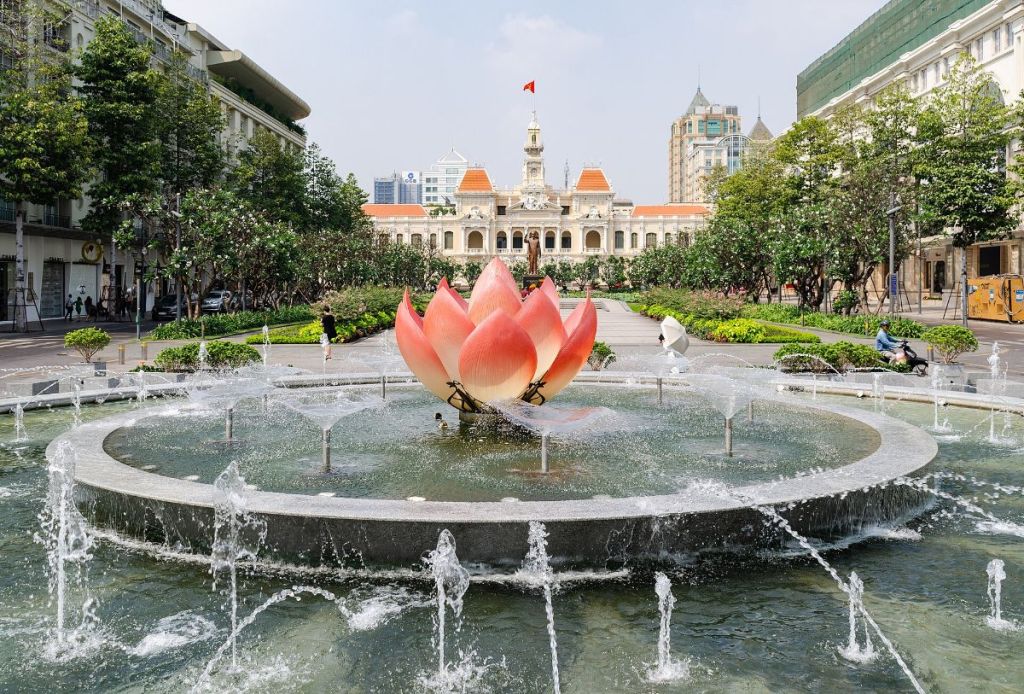
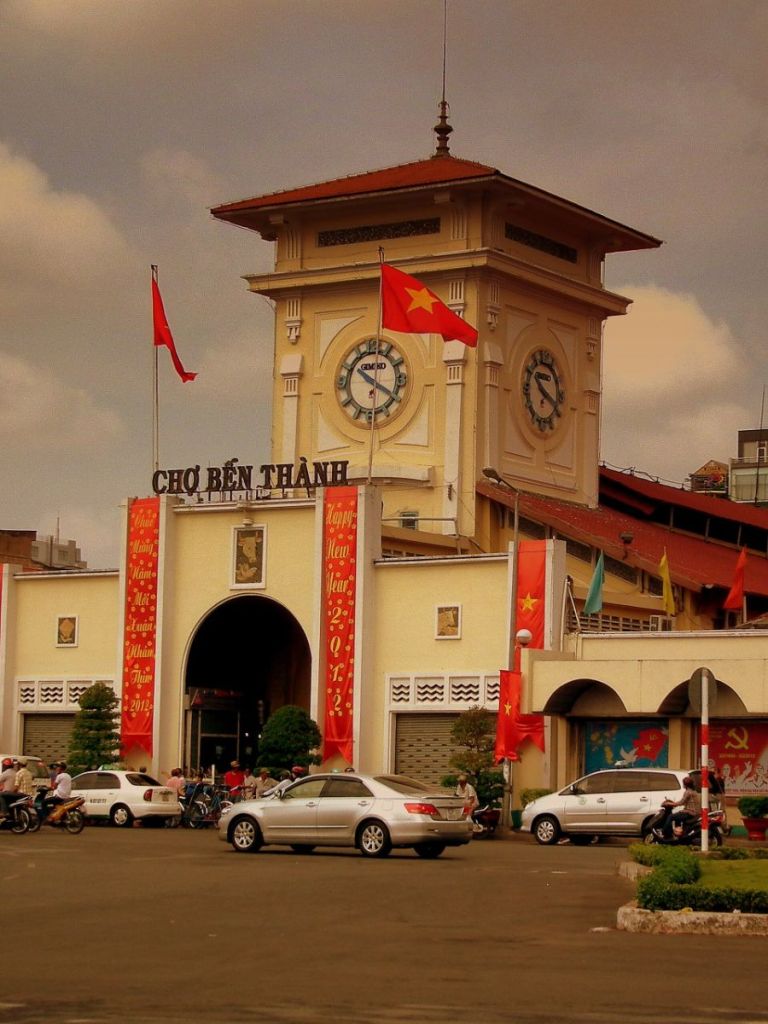
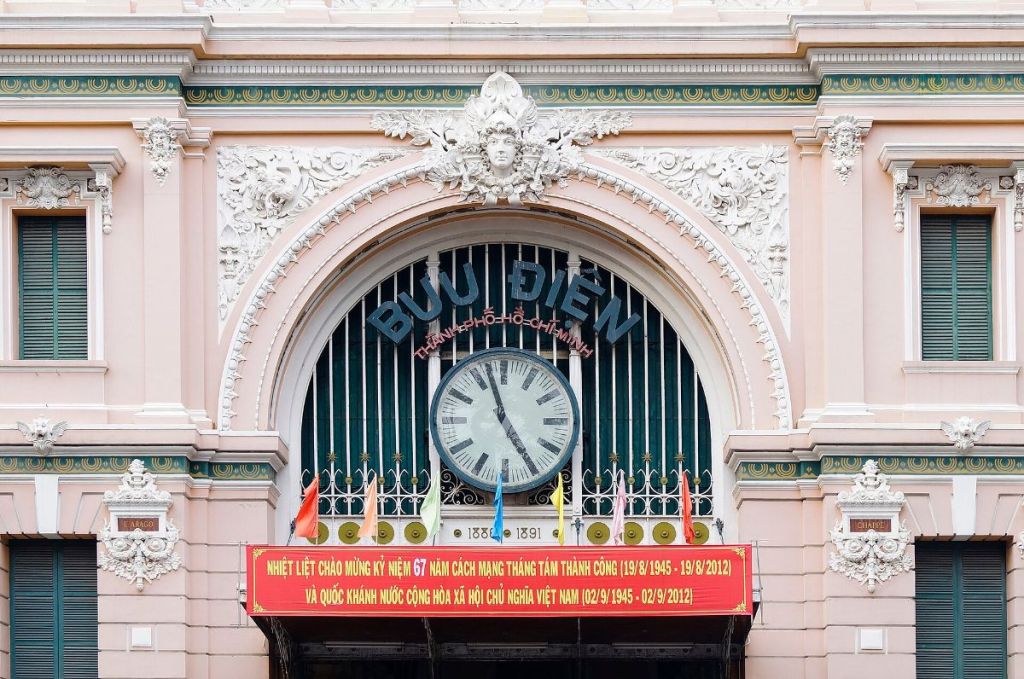
Photos: 1) Steffen Schmitz, CC BY-SA 4.0; 2) calflier001, CC BY-SA 2.0; 3) Prenn, CC BY-SA 3.0; via Wikimedia Commons.
Which vehicle size fits your group?
Book a vehicle with about 20–30% more seats than people, because in Vietnam the luggage often rides on the back seats. A 16-seat minibus has little or no separate hold, so 16 adults with suitcases do not fit in one. Coaches with 29 and 45 seats have under-floor storage, but a 29-seater’s hold fills quickly when every traveler brings a large case.
| Group size | Vehicle | Luggage note | Expressway to Vung Tau (mid-2026 rule) |
|---|---|---|---|
| Up to 6 | One 7-seat car | Soft bags only; hard cases reduce seats to 4–5 | Allowed |
| 7–12 | Two limousine vans or 7-seat cars (each under 9 seats) | Split luggage evenly between the two | Allowed |
| 10–14 | One 16-seat minibus | Back row used for cases | Not allowed; uses QL51 |
| 15–24 | One 29-seat coach | Under-floor hold plus spare seats | Not allowed; uses QL51 |
| 25–30 | One 45-seat coach, or a 29-seat coach plus a 16-seat minibus | Hold takes one large case per person | Not allowed; uses QL51 |
Charter coach operators do not publish fixed prices for 16-, 29- or 45-seat vehicles. They quote per request, and the quote rises at weekends and public holidays. Ask two or three operators for a written quote covering the same dates and the same route, and confirm four things are included: road tolls, parking, the driver’s meals and accommodation, and overtime after the agreed finish hour. A quote that leaves any of these out is not comparable to one that includes them.
One vehicle is nearly always better than two for a group of up to 30. With a single coach, the group lead does one headcount, the guide gives one briefing, and nobody ends up at a different restaurant. Two vehicles make sense when the group wants to use the expressway to Vung Tau, or when half the party will regularly do a different activity.
How much buffer time should a big group build into each day?
Add roughly 30–45 minutes of buffer to every road transfer and at least 15 minutes to every stop for a group of 10–30. These figures are planning estimates, not rules, but they reflect how group time actually goes: someone forgets a phone, the lift holds six people at a time, and thirty people take twenty minutes to order drinks.
| Situation | Rule of thumb (estimate) | Why |
|---|---|---|
| Morning departure from a hotel or villa | Announce a time 15 minutes before the real one; bags in the lobby 30 minutes before | Loading 20–30 cases takes time |
| Road transfer over 1 hour | Add 30–45 minutes to the quoted drive time | Traffic leaving Saigon plus one rest stop |
| Rest stops | One 15–20 minute stop every 90 minutes or so | Toilets, coffee, motion sickness |
| Ferry departure | Whole group at the pier 45 minutes early | The operator asks for 30 minutes; a group needs more |
| Domestic flight | Arrive at the terminal 2.5 hours before departure | Group check-in and bag drop are slow |
| Restaurant meal for 20+ | Allow 90 minutes with a pre-ordered menu, 2 hours without | Kitchens cook to order |
| Activities per day | One main activity plus one optional | Keeps the evening free and the mood good |
| Last activity before a flight or ferry | Nothing that cannot be cut short | The fixed departure always wins |
Set one meeting-point rule on day one and never change it: the place the coach dropped you is the place it collects you, and the stated time is “wheels moving”, not “start walking back”. A shared chat group with the live location of the group lead solves most stragglers.
Itinerary A: how does a 5-day Vietnam group itinerary with a Vung Tau villa weekend work?
Itinerary A gives the group two nights in central Saigon and two nights together in a private villa in Vung Tau, with one transfer each way. It is the easiest of the three to run, and it suits groups where ages range from toddlers to grandparents.
| Day | Plan | Transport | Key times (suggested) | Book ahead |
|---|---|---|---|---|
| 1 | Arrive at Tan Son Nhat Airport, hotel in District 1, welcome dinner | Coach sized to the largest arrival wave | Dinner 18:30 | Airport pickup, dinner table |
| 2 | Central Saigon on foot and by coach; evening river cruise | Coach for half a day | Depart 08:00; cruise boarding early evening | Guide, cruise tickets |
| 3 | Transfer to Vung Tau, villa check-in, pool and barbecue | Coach via QL51, or ferry | Depart 09:00; arrive about 12:30 | Coach or ferry, villa, groceries |
| 4 | Beach morning, free afternoon, seafood dinner | Short local hops | Beach before 10:00; dinner 18:00 | Seafood restaurant |
| 5 | Check out, return to Saigon or the airport | Coach via QL51 | Depart by 09:00 for flights after 16:00 | Return coach |
Day 1: Arrival in Saigon
Big groups rarely land together, so sort arrivals into two or three waves and send one vehicle per wave instead of making early arrivals wait for hours. Ask everyone for flight numbers a week ahead and keep them in one shared sheet. The drive from Tan Son Nhat (Tân Sơn Nhất) Airport to District 1 usually takes 30–60 minutes depending on traffic, which is an estimate; add your buffer. Pick a hotel in District 1 so day 2 can be done partly on foot. Hold the welcome dinner near the hotel, with a set menu ordered in advance, and use it to hand out the printed day plan and confirm phone numbers. A tourist SIM is cheap: as of August 2026, a Viettel package with 60 GB for 30 days costs 200,000 VND and requires passport registration.
Day 2: Central Saigon
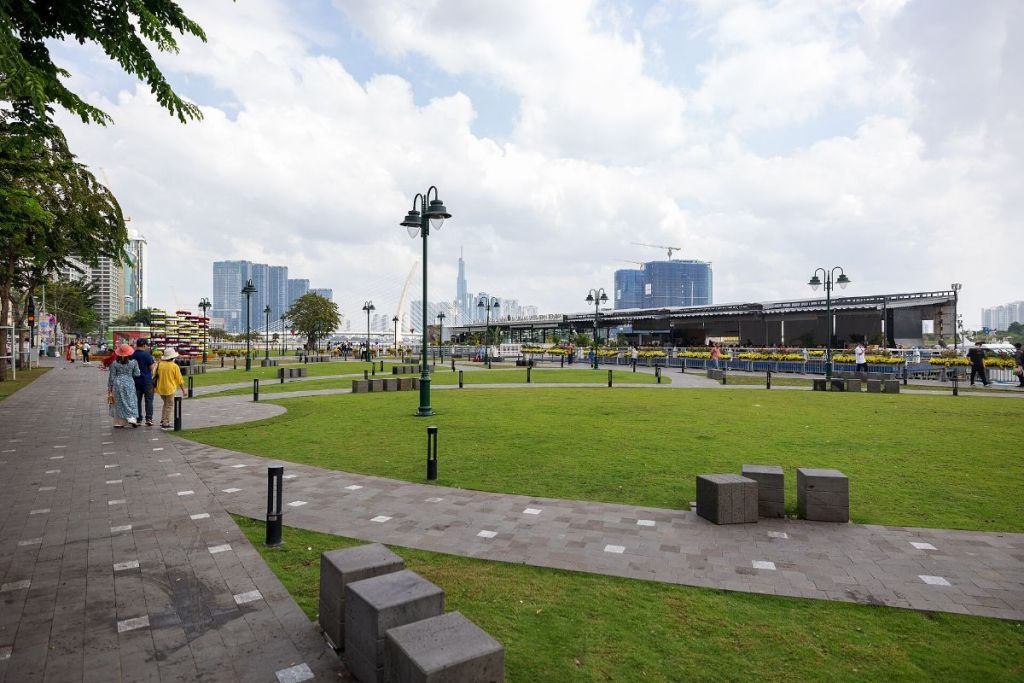
Leave at 08:00 and do the central sights in one loop while it is still cool: Independence Palace (Dinh Độc Lập), Notre-Dame Cathedral (Nhà thờ Đức Bà), the Central Post Office (Bưu điện Trung tâm Sài Gòn) and Ben Thanh Market (Chợ Bến Thành). The first three are within walking distance of each other, so the coach can drop the group once and collect it once. Give the group free time at the market instead of walking 25 people through its narrow aisles together. A local guide earns the fee here, because one person handles tickets and road crossings while the group lead counts heads. For how private guiding works in the city, and what it should cost, see this guide to private tours with a local guide. In the evening, a Saigon River cruise keeps everyone in one place: as of July 2026, sightseeing cruises start from about US$15 and dinner cruises run about US$35–60 per person.
Day 3: Transfer to Vung Tau and villa check-in
Depart at 09:00, after the worst of the morning traffic, with bags in the lobby at 08:30. A coach on QL51 needs 2.5–3 hours, so with one rest stop the group reaches Vung Tau around 12:30. Villa check-in is commonly mid-afternoon; confirm the exact hour in writing and ask whether bags can be dropped early. Have lunch in town first, then send two people to buy drinks, fruit and barbecue supplies while the rest settle in. Plan nothing else. The first afternoon at a villa with a pool fills itself.


Photos: King’s Villa.
Day 4: Vung Tau beach day
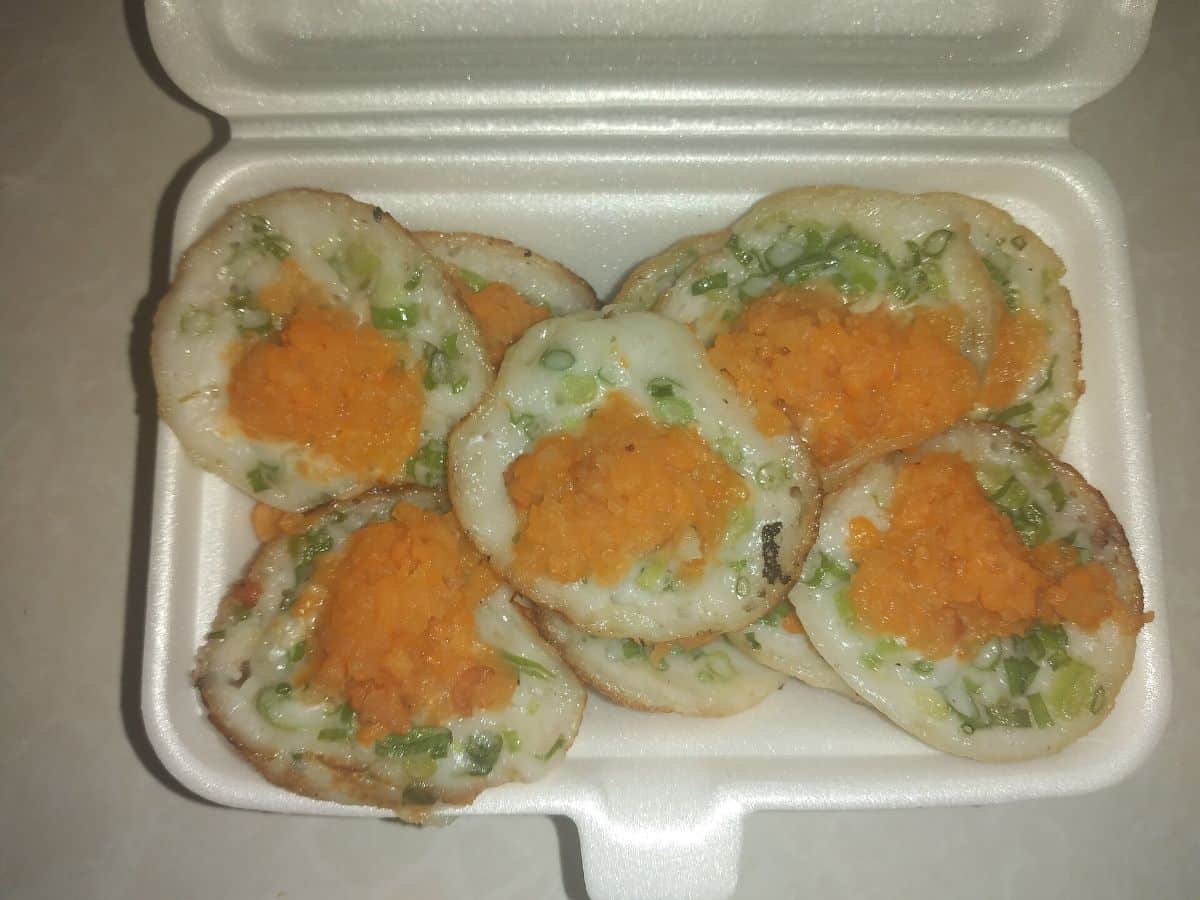
Start with bánh khọt, the small crisp rice cakes topped with shrimp that Vung Tau is known for; Banh Khot Goc Vu Sua (Bánh Khọt Gốc Vú Sữa) is the best-known address and handles large tables. Go to Back Beach (Bãi Sau) before 10:00, when the sun is manageable, and return to the villa for the hot middle of the day. Late afternoon suits a walk along Front Beach (Bãi Trước) for the sunset. Reserve the seafood dinner a day ahead and state the headcount.
Day 5: Return and departure
Leave the villa by 09:00 if anyone flies out the same day. With 2.5–3 hours on the road, a 45-minute buffer and check-in time, same-day flights should depart after 16:00 for domestic and later for international. Travelers with earlier flights should go back to Saigon the evening before.
How should you room a group in a Vung Tau villa?
Match the villa to the number of beds, not the advertised guest capacity, and assign rooms before anyone arrives. Group villas in Vung Tau typically have 4–7 bedrooms and sleep 15–25 guests. As of October 2026, rates run roughly 400,000–800,000 VND per person per night for groups of 10–20; this comes from a single agency source and depends on the villa, the day of the week and the season, so treat it as a rough guide and get a written quote.
A capacity of “20 guests” often means several rooms with two double beds each, plus extra mattresses. That works for families and close friends and works badly for colleagues. Ask for a bed-by-bed list, then draft a rooming plan in this order: couples and elders get rooms with private bathrooms on the ground floor, families with small children get rooms away from the pool terrace, and the late-night crowd goes furthest from both. Share the plan in the group chat a week before so swaps happen in advance and not at the front door.
Before paying a deposit, confirm these points in writing: the deposit amount and the cancellation terms, the surcharge for each extra person, check-in and check-out hours, noise rules and the hour the music must stop, whether the kitchen and barbecue are included, and how many cars or coaches can park. Many villa streets are too narrow for a 45-seat coach. Ask where the coach can stop, and how far that is on foot with luggage.
Weekend demand is heavy. Where the dates are flexible, plan the Vung Tau nights between Sunday and Thursday: roads are emptier, restaurants seat large groups more easily, and the widest choice of villas is available.
Need one house for the whole group? King’s Villa matches your group to a private villa in Vung Tau by number of bedrooms, beds, pool and distance to the beach. The full price and the house rules are confirmed in writing before you pay anything.
How do you move a big group from Saigon to Vung Tau?
For most groups of 15 or more, one chartered coach on National Road 51 is the simplest way to reach Vung Tau, and it takes 2.5–3 hours. There are two alternatives worth knowing, and each fits a different kind of group.
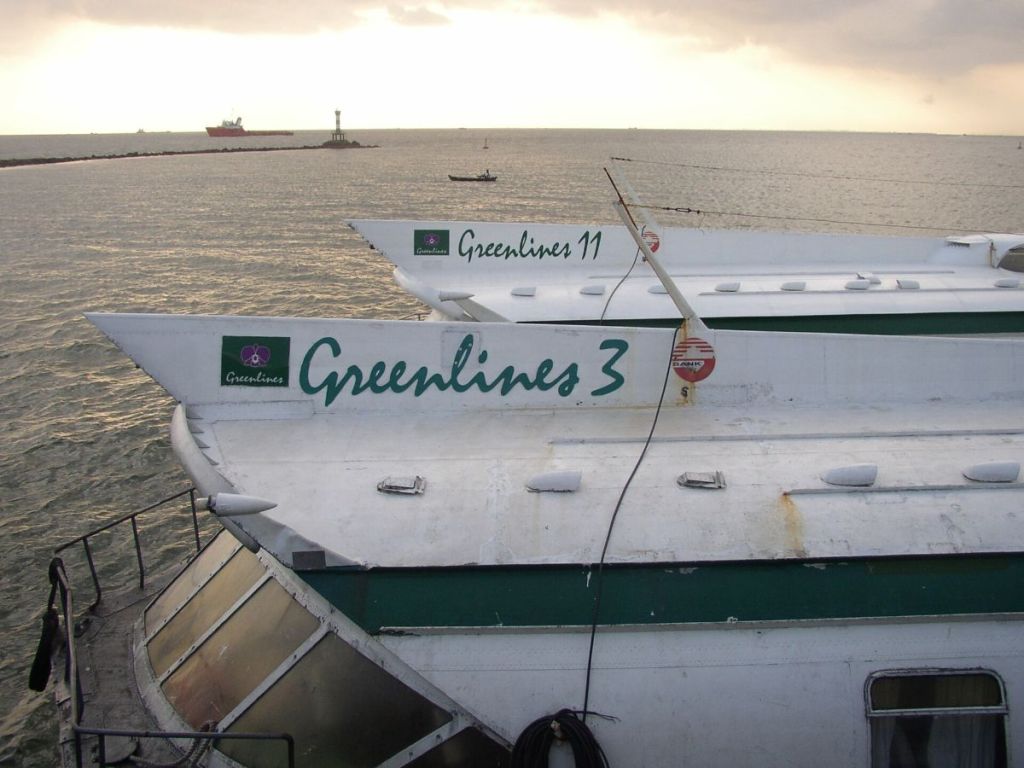
Photos: 1) HappyMidnight, CC BY-SA 4.0; 2) Kevin Rutherford, CC BY-SA 2.0; 3) Damian Vo, CC BY-SA 2.0; via Wikimedia Commons.
The first is the Bien Hoa–Vung Tau expressway. Its roughly 54 km have been open end to end in temporary operation since 18 May 2026, with speed limits of 60–80 km/h and no tolls as of August 2026. Cars make the trip from Ho Chi Minh City in 70–90 minutes when traffic is light. As of mid-2026, though, only vehicles under 9 seats may use it. A group of 10–12 can split into two limousine vans and save an hour or more. As of November 2026, a private car with driver costs about 950,000 VND one way for a 4-seater, about 1.2 million VND for a 7-seater and about 1.9 million VND for a limousine van. Seat-in-vehicle services also run: as of August 2026, a seat in a 9-seat limousine costs 140,000–290,000 VND and a seat in a 16-seat minibus 90,000–100,000 VND. The access rules may change, so ask the driver which road the vehicle will take.
The second is the Greenlines DP ferry from Bach Dang terminal (10B Ton Duc Thang, District 1) to Cau Da pier in Vung Tau, a crossing of about 2 hours. As of October 2026, boats leave Ho Chi Minh City at 09:00, 12:00 and 14:00 and leave Vung Tau at 12:00, 14:00 and 16:00. As of November 2026, an adult ticket costs 320,000 VND on weekdays, 350,000 VND at weekends and 380,000 VND during Tet and public holidays. Children aged 6–11 pay 270,000, 290,000 or 330,000 VND on the same three tiers, and children under 6 travel free. There is no group rate. For bookings of 5 or more tickets, cancellations go through the operator at least 24 hours ahead. The operator asks passengers to arrive 30 minutes early, and weekend return sailings sell out, so buy both directions at once.
The ferry is pleasant, and it removes traffic from the equation. Its weakness for groups is the last kilometer at each end: you still need vehicles from the hotel to the terminal and from the pier to the villa, and you should confirm the luggage allowance with the operator before choosing it for 25 people with large cases. More detail on each option is in a local’s guide to getting from Saigon to Vung Tau.
Local tip: If the group is 12 or fewer, ask for two limousine vans instead of one 16-seat minibus. Each van has under 9 seats, so as of mid-2026 both can use the expressway, and the trip drops from around 2.5–3 hours to 70–90 minutes in light traffic. Compare the two quotes; the time saved on both legs is often worth the difference.
Itinerary B: a 7-day southern loop Vietnam group itinerary
Itinerary B keeps the group in Saigon for four nights, with day trips to the Cu Chi Tunnels and the Mekong Delta, then finishes with two nights in a Vung Tau villa. The order matters: the two early-start days come first, while everyone has energy, and the rest days come last.
| Day | Plan | Transport | Key times (suggested) | Book ahead |
|---|---|---|---|---|
| 1 | Arrive, District 1 hotel, welcome dinner | Airport coach by arrival wave | Dinner 18:30 | Pickup, dinner |
| 2 | Central Saigon loop, free afternoon | Coach, half day | Depart 08:00; back by 12:30 | Guide |
| 3 | Cu Chi Tunnels (Ben Dinh) | Coach, about 1.5–2 hours each way | Depart 07:30; back about 14:30 | Coach, guide, lunch |
| 4 | Mekong Delta day trip | Coach plus boats | Depart 07:30; back about 17:30 | Tour or guide, boats, lunch |
| 5 | Transfer to Vung Tau, villa check-in | Coach via QL51, or ferry | Depart 09:00 | Coach or ferry, villa |
| 6 | Vung Tau: beach, viewpoint, seafood dinner | Short local hops | Early start, long midday break | Restaurant |
| 7 | Return to Saigon, departures | Coach via QL51 | Depart by 09:00 | Return coach |
Days 1–2: Arrival and central Saigon
Run these two days as in Itinerary A, but finish the city loop by 12:30 on day 2 and leave the afternoon free. Two long coach days follow, and a group that has rested goes into them in better shape. Skip the river cruise or move it to the evening of day 2, according to budget.
Day 3: Cu Chi Tunnels
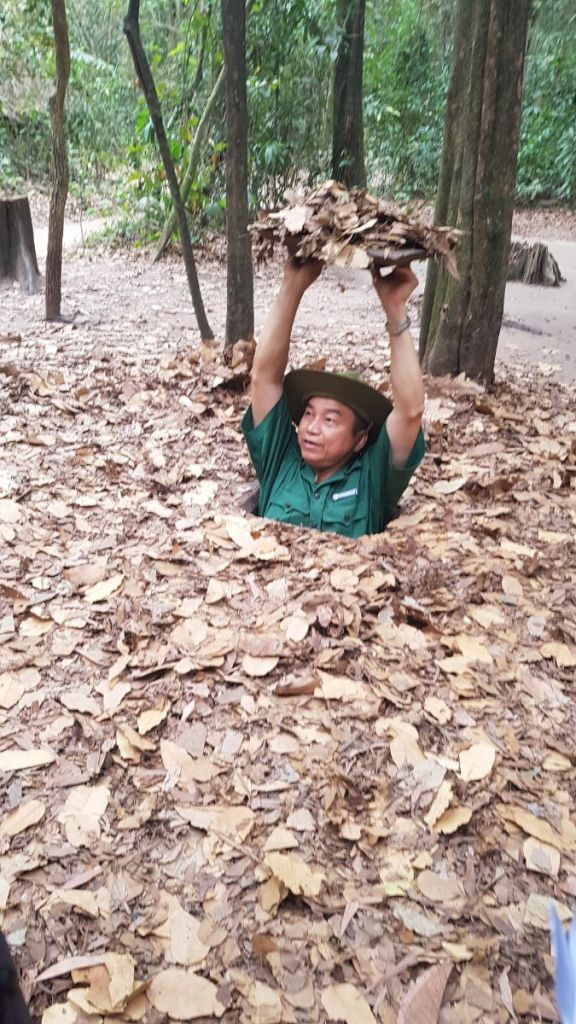
Leave at 07:30. The Ben Dinh site of the Cu Chi Tunnels (Địa đạo Củ Chi) is about 1.5–2 hours from District 1 and opens 07:00–17:00; the ticket for foreign visitors is about 110,000–135,000 VND as of 2026, as sources differ on the exact figure. An early departure puts the group at the entrance before the midday heat and ahead of the larger tour buses. Allow about 2.5 hours on site for a group, because the tunnel sections admit people in small numbers. Tell everyone in advance that going underground is optional; the tunnels are narrow and hot, and a few people in any group of 20 will prefer to stay above ground. Eat lunch near the site or on the way back and reach the hotel by about 14:30. As of July 2026, a private guide for a half day or a Cu Chi trip costs around US$90.
Day 4: Mekong Delta
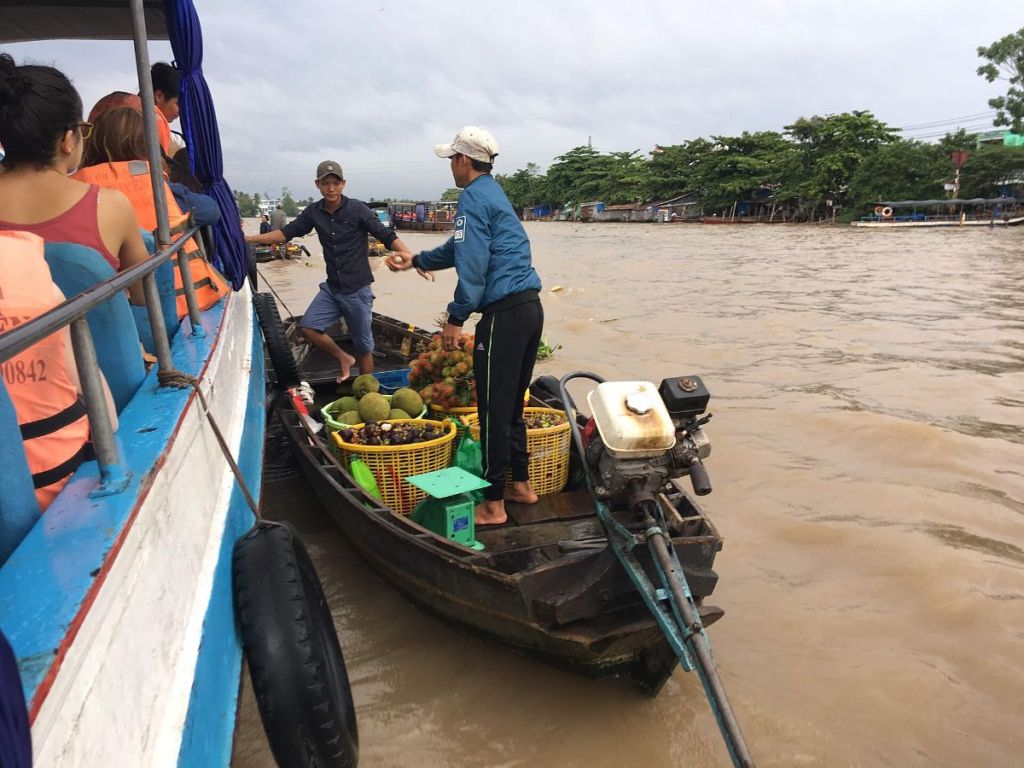
Leave at 07:30 again for the delta towns closest to Saigon, My Tho (Mỹ Tho) and Ben Tre (Bến Tre), which most day trips use; the drive is around 2 hours each way as an estimate. The delta part of the day happens on the water: a larger boat across the river, then small rowing boats holding four or so passengers each through the narrow canals. This is where a big group naturally splits, so agree the regrouping point before boarding. As of July 2026, shared Mekong day trips start from about US$20 per person and small-group trips run US$35–60; a private guide for the Mekong starts from about US$120. For 15 or more people, a private coach and guide usually works out better than buying seats on a shared tour, since the day runs to the group’s clock. Get quotes for both.

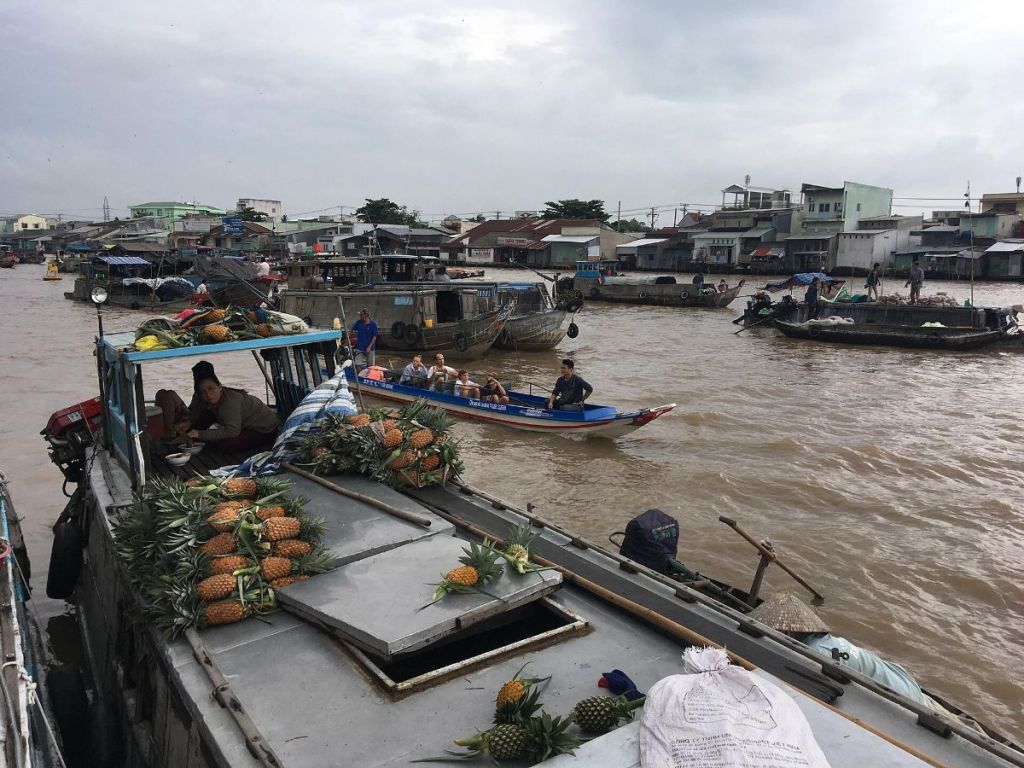
Photos: 1) Andre Hospers, CC BY-SA 4.0; 2) Andre Hospers, CC BY-SA 4.0; 3) Christophe95, CC BY-SA 4.0; 4) Christophe95, CC BY-SA 4.0; via Wikimedia Commons.
Local tip: Give every traveler a number on day one and count off aloud each time the coach doors close. It takes 20 seconds for 30 people. At the Mekong boat jetties and the Cu Chi exit, where the group has been split into small sets, it is the fastest way to find out who is missing before the vehicle moves.
Day 5: Saigon to Vung Tau
Depart at 09:00 by coach, or take the 09:00 ferry if the group has light luggage and the hotel is close to Bach Dang terminal. With the ferry, send a van with the heavy bags by road, or confirm in advance that everything can travel on board. Lunch in Vung Tau, check in at the villa, and keep the afternoon clear. After two days of early starts, the group needs a pool and nothing on the schedule.
Day 6: Vung Tau
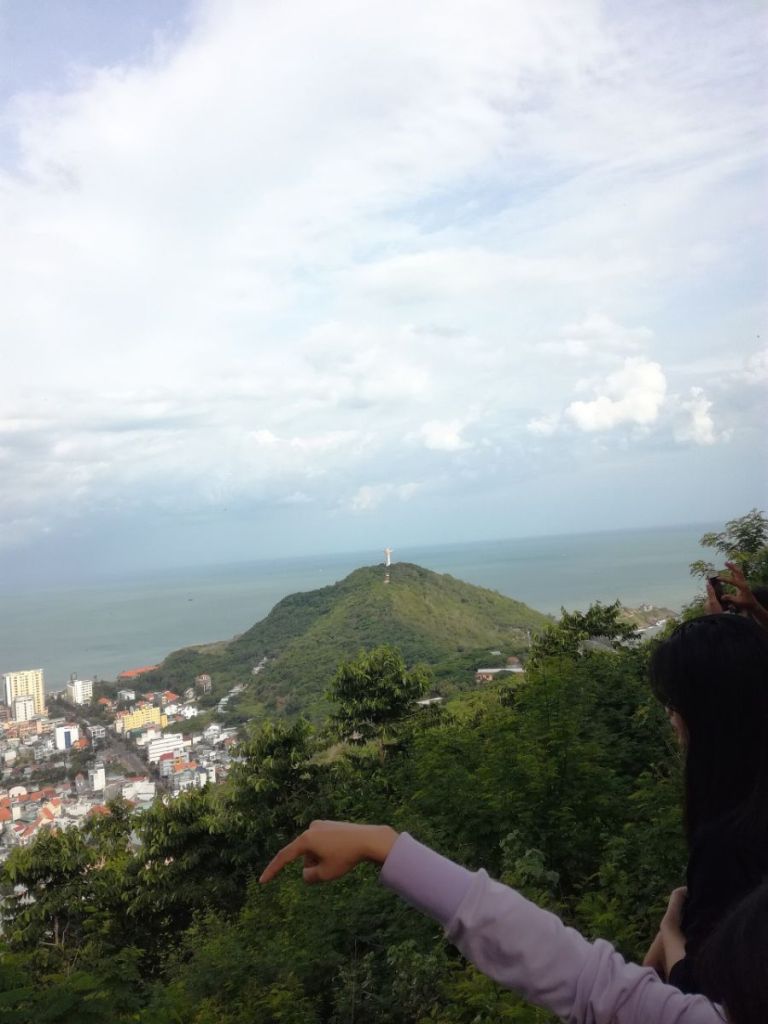
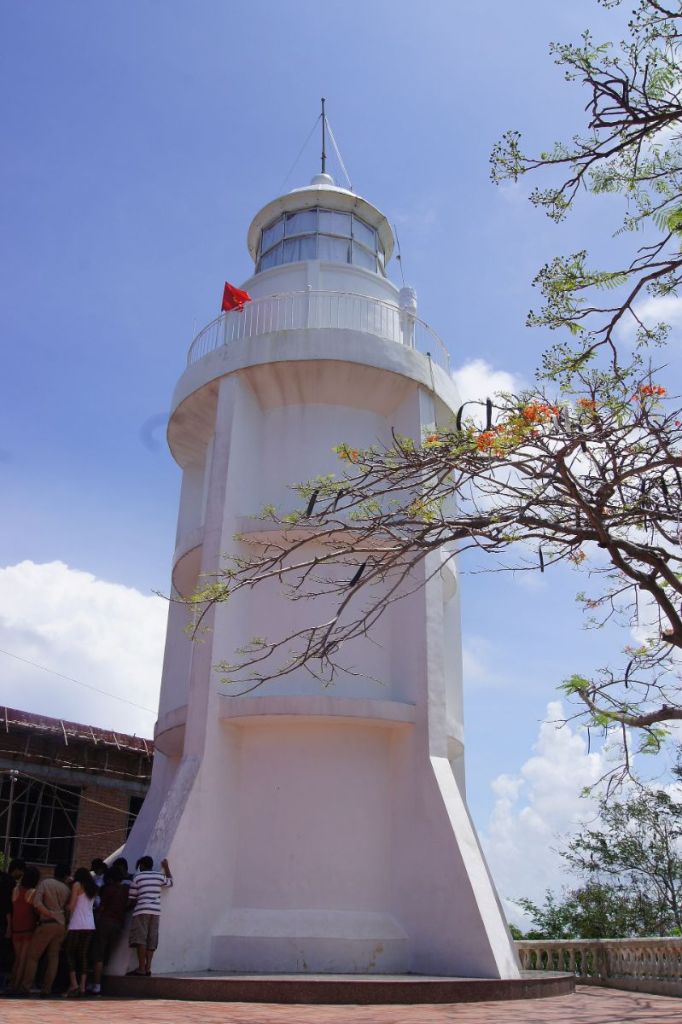
Offer two tracks in the morning and let people choose. The active track climbs the steps to the Christ the King statue (Tượng Chúa Kitô Vua) on Small Mountain (Núi Nhỏ) early, before the heat. The slow track goes directly to Back Beach (Bãi Sau). Everyone meets back at the villa for lunch. For the last dinner, book a seafood restaurant, or try lẩu cá đuối, the stingray hotpot that is a local specialty; as of 2026 a pot costs 220,000–250,000 VND and feeds a few people, so order one per table of four or so.
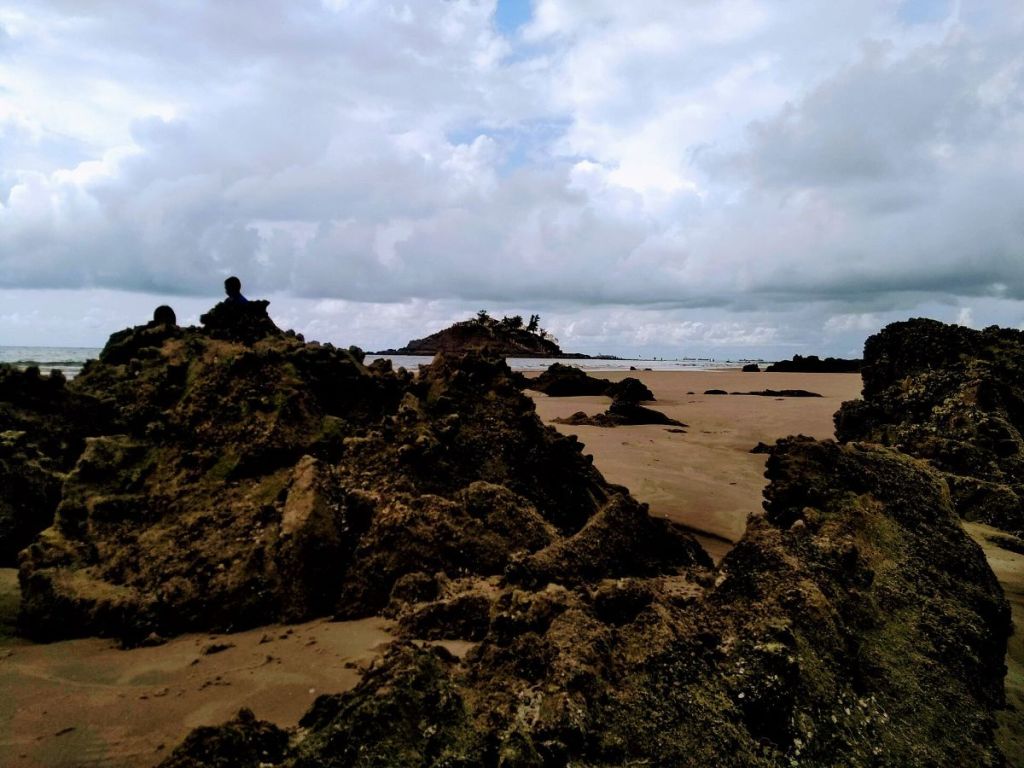
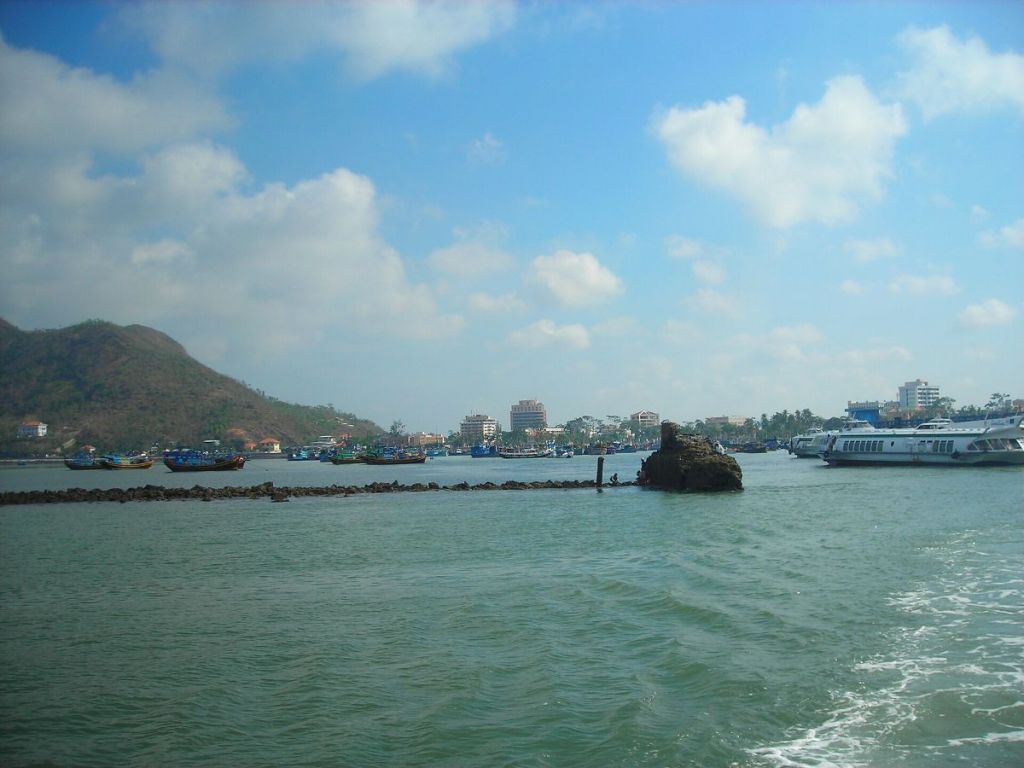
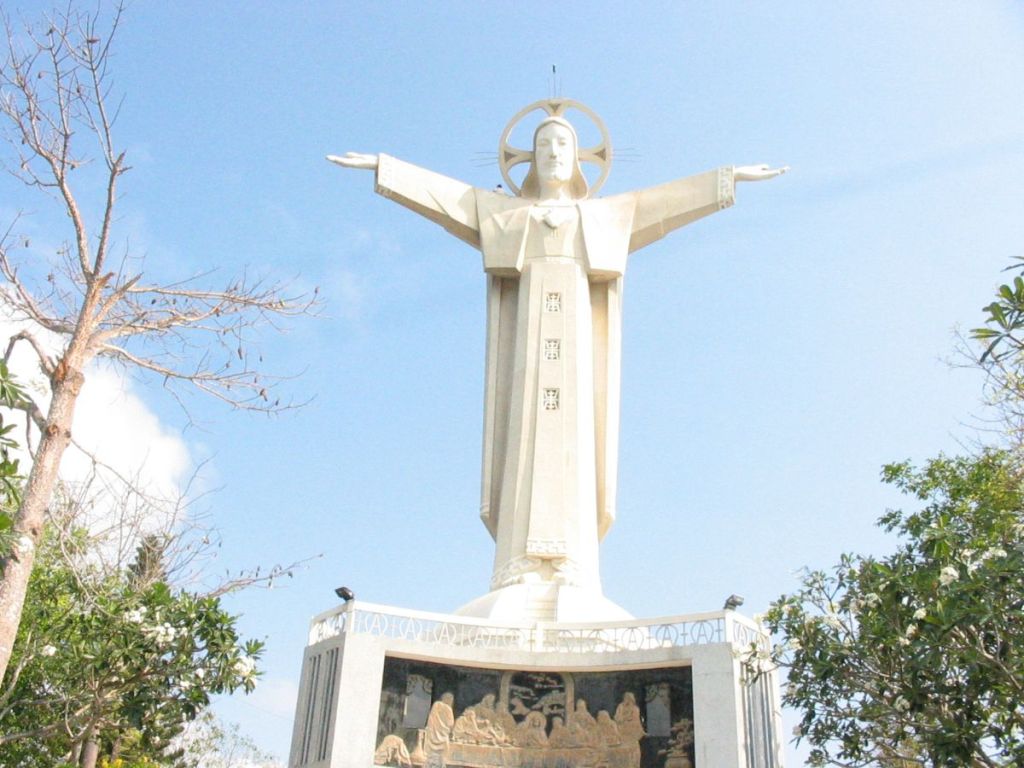
Photos: 1) Willyvu, CC BY-SA 4.0; 2) Genghiskhanviet, public domain; 3) Chris Phan, CC BY-SA 2.0; via Wikimedia Commons.
Day 7: Return and departures
Use the same timing as day 5 of Itinerary A: leave by 09:00, and book flights that depart after 16:00. Collect the pooled tips before boarding the coach, not at the airport curb.
Who books what, and when?
Split the bookings among four or five named people, with one group lead who holds the master schedule. One organizer who does everything becomes the single point of failure and has no holiday. Roles also make it clear who the driver, the villa host and the restaurant should call.
| Role | Books and confirms | Carries on the trip |
|---|---|---|
| Group lead | Dates, master schedule, guide | Printed day plan, all supplier phone numbers |
| Transport lead | Airport pickups, coach charter, ferry tickets, domestic flights | Flight list, driver’s number, written coach quote |
| Rooming lead | Saigon hotel rooms, villa, rooming plan | Passport list for check-in, villa rules in writing |
| Food lead | Dinner reservations, set menus, dietary list, villa groceries | Allergy and diet list, restaurant confirmations |
| Treasurer | Deposits, shared kitty, tips | Cash float in VND, expense sheet |
Each lead re-confirms their bookings by message 48 hours before, with the date, the hour and the headcount written out. Vietnamese suppliers generally confirm through Zalo or WhatsApp, and a screenshot of that confirmation is your record. Hotels and villas must register guests’ passports, so the rooming lead should collect clear photos of every passport before arrival.
Tips are easiest pooled. As of October 2026, typical amounts are 200,000–400,000 VND for a private guide for a full day, 50,000–100,000 VND for a driver, and 5–10% in restaurants that have not added a service charge. On a group tour, 100,000–150,000 VND per traveler for the guide is common. The treasurer collects one amount per person at the start and hands over one envelope per person tipped.
How do you handle meals and luggage for 10–30 people?
Reserve every dinner for more than 10 people at least a day ahead, and pre-order a set menu for anything over 20. Vietnamese meals are shared from the middle of the table, which suits groups: the restaurant sets tables of 8–10 and sends the same dishes to each. Send the food lead’s diet list with the booking, covering vegetarians, shellfish allergies and anyone who does not eat pork.
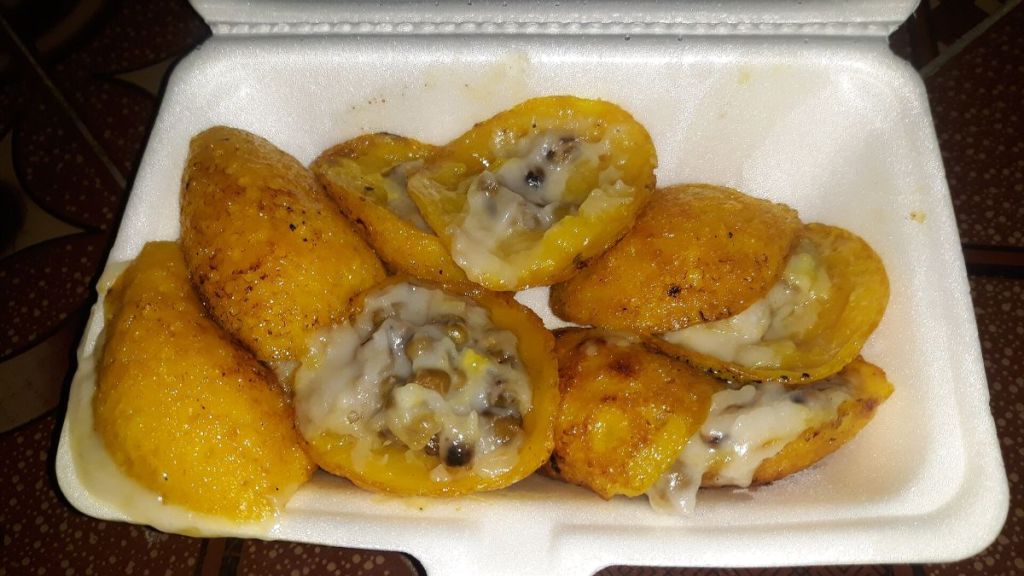
Photos: 1) Nguyenhai314, CC BY-SA 4.0; 2) Baoothersks, CC BY-SA 4.0; 3) Hoangvantoanajc, CC BY-SA 3.0; via Wikimedia Commons.
Seafood in Vung Tau is sold by weight from live tanks. Agree the price per kilogram and watch the weighing before anything goes to the kitchen, and ask for the cooking style and any cooking fee at the same time. On villa days, a barbecue on the terrace is often the easiest and cheapest group dinner; ask the villa in advance whether a grill, charcoal and tableware are provided.
Local tip: When you book seafood for a big table in Vung Tau, ask the restaurant to write the price per kilogram and the weighed amount on the order slip before cooking. One person from the group should be at the tank for the weighing. This is normal practice, staff expect it, and it prevents every bill dispute.
For luggage, ask for one medium case and one day bag per person, and say so in the first message to the group. Tag every bag with the same bright ribbon so drivers and porters can spot the group’s pile. On transfer days, the bags go down 30 minutes before departure and one person counts them onto the coach and off again; the number of bags goes on the day plan next to the number of people. If the trip includes a domestic flight, check the fare’s checked-baggage allowance when booking, because the cheapest fares may not include it.
Save the emergency numbers in the group chat on day one: police 113, fire 114, ambulance 115 and rescue 112. These lines are answered in Vietnamese, so the practical route in an emergency is to ask the guide, the hotel desk or the villa host to make the call.
Itinerary C: can a group add Da Nang and Hoi An in 10 days?
Yes, ten days is enough to combine Saigon, a Vung Tau villa stay and four nights on the central coast, provided the group takes one domestic flight and accepts three changes of bed. The flight from Ho Chi Minh City to Da Nang (Đà Nẵng) takes about 1 hour 20 minutes, and Hoi An (Hội An) is about 45 minutes from Da Nang airport by road.
| Day | Plan | Transport | Key times (suggested) | Book ahead |
|---|---|---|---|---|
| 1 | Arrive in Saigon, welcome dinner | Airport coach by wave | Dinner 18:30 | Pickup, dinner |
| 2 | Central Saigon loop | Coach, half day | Depart 08:00 | Guide |
| 3 | Cu Chi Tunnels or Mekong Delta (group vote) | Coach | Depart 07:30 | Coach, guide, lunch |
| 4 | Transfer to Vung Tau, villa check-in | Coach or ferry | Depart 09:00 | Transport, villa |
| 5 | Vung Tau beach day | Local hops | Free schedule | Seafood dinner |
| 6 | Back to Saigon airport, fly to Da Nang, drive to Hoi An | Coach, flight, coach | Leave villa 08:00; flight after 15:00 | Flights, two coaches, Hoi An hotel |
| 7 | Hoi An Ancient Town on foot | None | Morning walk, free afternoon | Guide (optional) |
| 8 | Free day: beach, cooking class or tailor fittings | Taxis or hotel shuttle | Flexible | Classes for 10+ |
| 9 | Marble Mountains, move to Da Nang, beach evening | Coach | Depart 08:30 | Coach, Da Nang hotel, farewell dinner |
| 10 | Depart from Da Nang airport | Coach by departure wave | At terminal 2.5 hours before | Airport transfers |
Days 1–5: Saigon and Vung Tau
Follow the pattern of Itinerary B but with one day trip, not two. Put the choice between Cu Chi and the Mekong Delta to a vote before the trip. Cu Chi is the shorter day and leaves a free afternoon; the Mekong is a full day and more relaxed in pace. A group of 20 or more could split, with one vehicle to each, but that doubles the guide and vehicle cost, so price it first.
Day 6: The flight day
Treat day 6 as a pure travel day. Leave the villa at 08:00, which puts the coach at Tan Son Nhat around 11:00–11:30 with a rest stop. Book a flight that departs after 15:00: that leaves margin for traffic on QL51, lunch at the airport and a slow group check-in. With a flight of about 1 hour 20 minutes and a 45-minute drive, the group reaches a Hoi An hotel in the early evening. Have the transport lead hold everyone’s booking references in one document, and check in online the day before where the airline allows it.
For tickets, compare two routes. Vietnam Airlines runs a group-buying promotion, valid to 31 December 2026, with domestic discounts for 2 or more, 4 or more, and 8 or more passengers on one booking, reaching up to 25% off economy fares for 8 or more. Changes and refunds apply to the whole booking and children pay the adult fare. Groups of 10 or more usually go through an airline’s group desk or a travel agent and pay a deposit to hold seats; that is the industry norm, not a published rule, so ask the airline or agent for the terms. Either way, put everyone on the same flight. Splitting 25 people across two departures to save a little adds a second coach at each end.
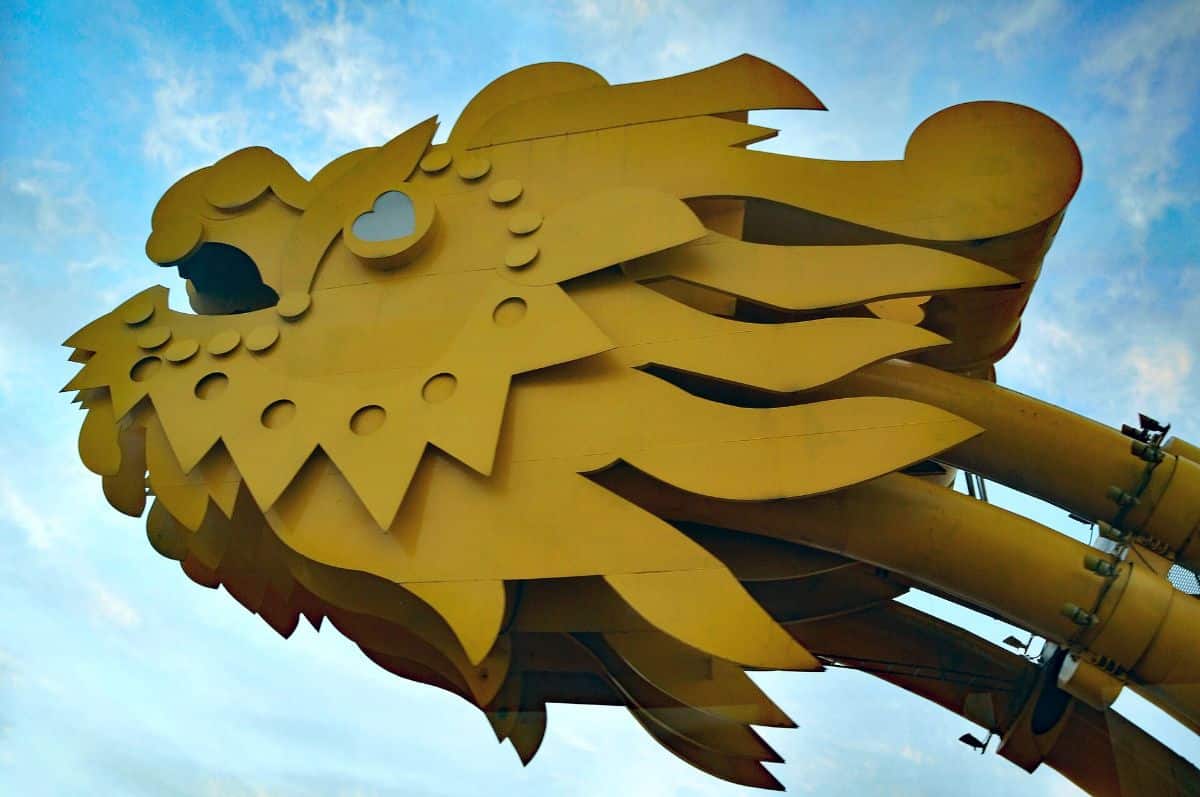
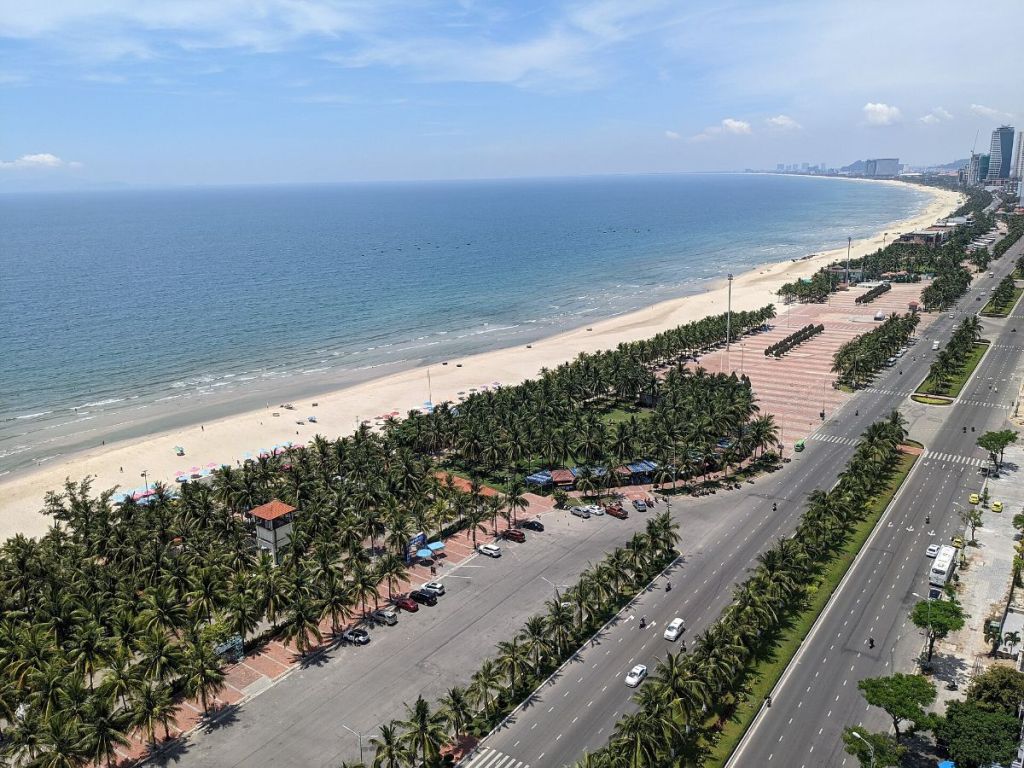
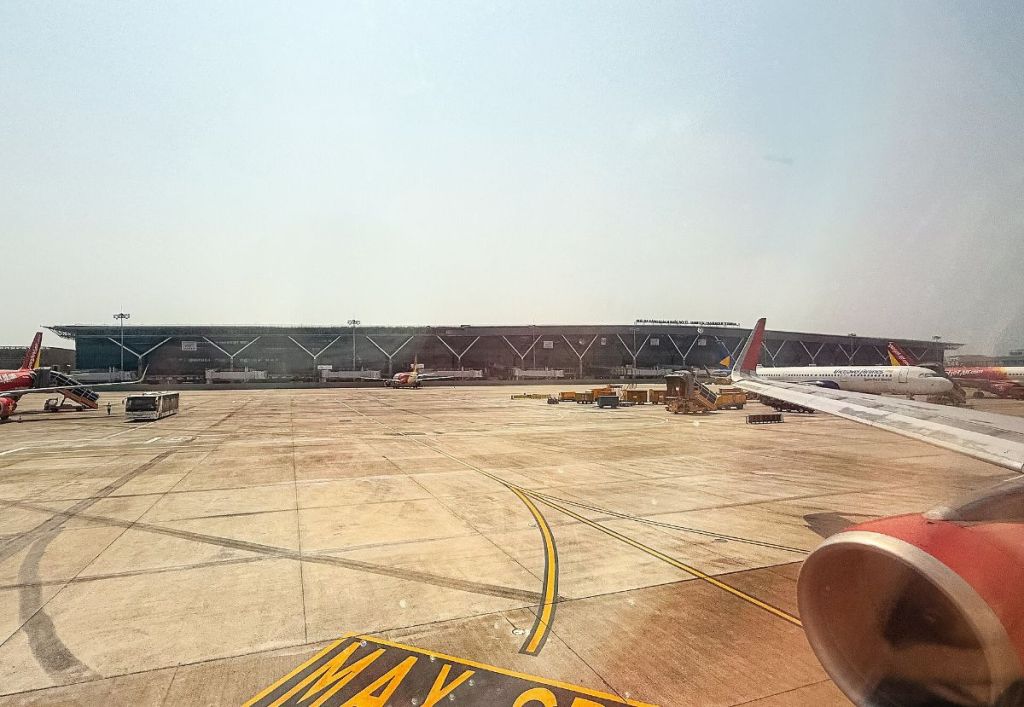
Photos: 1) Steffen Schmitz, CC BY-SA 4.0; 2) P. Hughes, CC BY 4.0; 3) Jpatokal, CC BY-SA 4.0; 4) Biodin, CC BY 4.0; via Wikimedia Commons.
Days 7–8: Hoi An
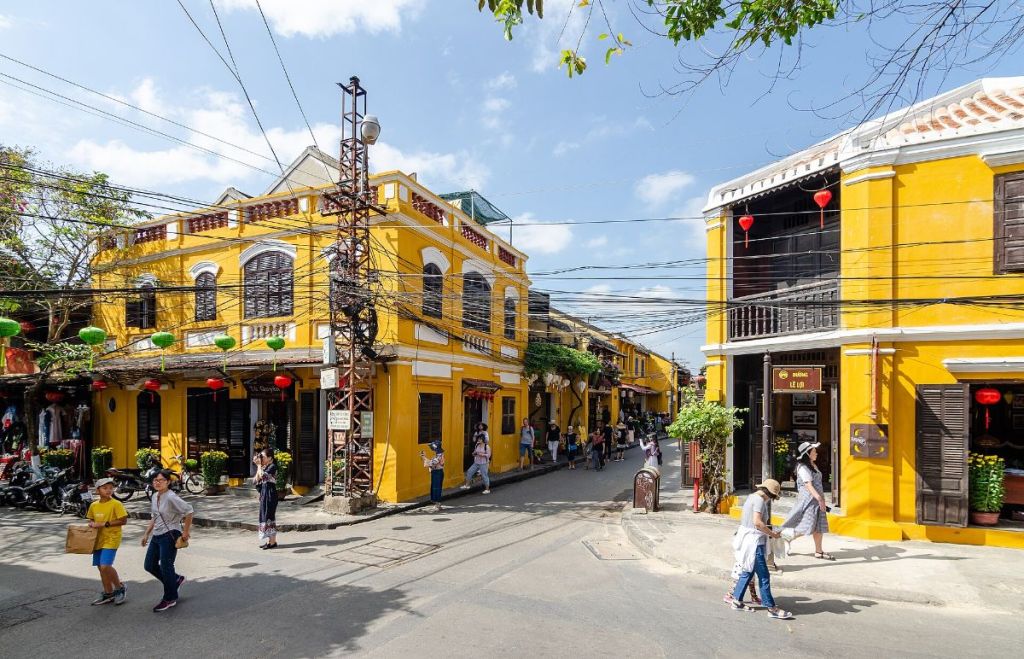
Hoi An Ancient Town (Phố cổ Hội An) is compact and largely closed to cars, so the coach is not needed for two days. Do one guided walk on the first morning, taking in the Japanese Covered Bridge (Chùa Cầu), then let people scatter. Day 8 is deliberately free. Some will go to An Bang Beach (Bãi biển An Bàng), some will book a cooking class, and anyone who ordered tailoring on day 7 needs time for a second fitting. Set one fixed point each day, the group dinner, and reserve it with a headcount, because restaurants in the old town are small.
Days 9–10: Da Nang and departure
Check out at 08:30 and stop at the Marble Mountains (Ngũ Hành Sơn) on the way to Da Nang; the site involves many steps, so offer a café stop at the base for those who would rather not climb. Spend the last afternoon at My Khe Beach (Bãi biển Mỹ Khê) and hold the farewell dinner nearby. Staying the final night in Da Nang puts the group 15 minutes or so from the airport on day 10, which removes the risk from morning departures. Groups that prefer rail for part of the route can ask Vietnam Railways about group fares: as of September 2026, parties of 11 or more receive 2–12% off depending on the number of tickets, the timing and the route.
When is the best time to run a Vietnam group itinerary?
For the southern parts of these routes, December to April is the easiest window, because it is the dry season in the south. From May to November the south has its rainy season, which mostly means short, heavy afternoon downpours. A group can work around them by scheduling outdoor activity in the morning and keeping afternoons for the pool, lunch or the coach. The central coast has its own weather pattern, so check the forecast for Da Nang and Hoi An separately if you choose Itinerary C.
Public holidays matter more than weather for a big group. Tet 2027 falls on 6 February, with the official holiday running Thursday 4 to Wednesday 10 February 2027, and Vietnam Railways lists its Tet peak period as 23 January to 25 February 2027. The Reunification Day and Labor Day break runs Friday 30 April to Monday 3 May 2027. The Hung Kings holiday (16–18 April 2027) and the National Day break (2–5 September 2027) are proposed dates at the time of writing. On all of these, coach quotes rise, ferry tickets cost more, roads to Vung Tau are slow, and group villas are booked far ahead. Either avoid those dates or book early and add an extra hour to every transfer.
Useful Vietnamese for group logistics
- Xe này bao nhiêu chỗ? — How many seats does this vehicle have?
- Mấy giờ xe đón? — What time does the vehicle pick us up?
- Giá đã gồm phí cầu đường chưa? — Does the price include road tolls?
- Cho tôi đặt bàn hai mươi người. — I would like to book a table for twenty people.
- Bao nhiêu tiền một ký? — How much per kilogram?
- Đoàn mình đủ người chưa? — Is our whole group here?
Planning the Vung Tau nights of your itinerary? Send King’s Villa your dates and headcount, and the team will match your group to a private villa in Vung Tau by bedrooms, beds, pool and distance to the beach, with the full price and house rules confirmed in writing.
Frequently Asked Questions
How many days does a big group need for Saigon and Vung Tau?
Five days is the practical minimum for a group of 10–30. That gives two nights in Saigon and two nights in a Vung Tau villa, with one coach transfer each way of 2.5–3 hours. With only three or four days, the transfers and check-ins take up too large a share of the trip, and a single delay removes a whole activity.
What size bus does a group of 20 need in Vietnam?
A group of 20 needs a 29-seat coach. The spare seats are not wasted: they take day bags and any cases that do not fit in the hold, and they let people spread out on a 3-hour drive. A 16-seat minibus is too small, and two minibuses double the headcounts and the briefing. Ask the operator about the size of the luggage hold when you request the quote.
Can a 29-seat or 45-seat coach use the Bien Hoa–Vung Tau expressway?
No, not as of mid-2026. The expressway has been in temporary operation since 18 May 2026 and only admits vehicles under 9 seats, so 16-, 29- and 45-seat coaches still travel on National Road 51 and need 2.5–3 hours. The rule may change once the road is fully commissioned, so ask the coach operator which route applies on your dates.
Is the ferry or a coach better for getting a group to Vung Tau?
A coach is better for most groups of 15 or more, because it runs door to door on your schedule and carries all the luggage. The Greenlines DP ferry takes about 2 hours and avoids road traffic, but it has no group rate, runs three times a day as of October 2026, and still requires vehicles at both ends. It suits smaller groups with light bags.
What time should a group leave Vung Tau to catch a flight from Ho Chi Minh City?
Leave about 7 hours before a domestic flight and about 8 hours before an international one. That covers 2.5–3 hours by coach on National Road 51, a rest stop, a 45-minute buffer for traffic, and arriving at the terminal 2.5–3 hours ahead for group check-in. These are estimates. If the flight leaves before mid-afternoon, return to Saigon the night before.
How much buffer time should we plan between activities?
Plan 30–45 minutes of buffer on every road transfer over an hour and 15 minutes at every stop. For a group of 10–30, a day with one main activity and one optional extra is realistic. Announce departure times 15 minutes before the real ones, ask for bags in the lobby 30 minutes ahead, and never schedule anything that cannot be shortened before a ferry or a flight.
Can a group visit the Cu Chi Tunnels and the Mekong Delta on the same day?
It is possible but not advisable for a big group. Cu Chi lies about 1.5–2 hours from District 1 in one direction and the Mekong Delta towns lie in another, so a combined day means around 5 hours or more on the coach. Tours that combine both exist, but with 20 or more people each site is rushed. Give each a separate day or choose one.
How do group discounts on domestic flights work?
Discounts depend on how many passengers are on one booking. Vietnam Airlines’ group-buying promotion, valid to 31 December 2026, offers domestic discounts for 2, 4 and 8 or more passengers, up to 25% off economy for 8 or more. Changes and refunds apply to the whole booking, and children pay the adult fare. Larger groups usually book through a group desk or agent with a deposit.
How do we split bedrooms fairly in a villa?
Ask for a bed-by-bed list and assign rooms before arrival. Give couples and older travelers the rooms with private bathrooms, place families with small children away from the pool terrace, and put the late-night group furthest from both. Share the plan a week ahead so people can swap. If rooms differ a lot in quality, some groups adjust each person’s share of the cost.
Should a big group split up for some days?
Yes, planned splits make a group trip better. Offer two tracks on beach days and free days, such as an early climb for the active travelers and a slow morning for the rest, then bring everyone together for dinner. Avoid splitting on transfer days or on day trips with a hired coach, because a second vehicle and guide roughly double that day’s transport cost.
How much should a group tip the driver and guide?
As of October 2026, typical tips are 200,000–400,000 VND for a private guide for a full day and 50,000–100,000 VND for a driver. On a group tour, 100,000–150,000 VND per traveler for the guide is common. Collect one amount from everyone at the start of the trip and hand over a single envelope per person, which avoids an awkward collection at the airport.
Which of the three itineraries is easiest for a group with children and grandparents?
Itinerary A, the 5-day Saigon and Vung Tau plan, is the easiest. It has only one change of accommodation, no flight, no departures before 08:00, and two full days based at a villa where different generations can set their own pace. Itinerary B adds two long coach days, and Itinerary C adds a flight and three changes of bed, which tire the youngest and oldest travelers.
Sources
- Vietnam National Authority of Tourism: visa requirements
- Greenlines DP: ferry fares and ticket policy
- Vietnam Airlines: group buying deal
- Vietnam Railways: timetables and tickets
- UK Foreign, Commonwealth & Development Office: getting help in Vietnam
Bài viết liên quan
Planning a Company Trip in Vietnam: Budget, Venues and Activities
How to plan a company trip in Vietnam: per-person budgets, Vung Tau, Ho Tram, Long [...]
Group Travel in Vietnam: How to Plan a Trip for 10 or More People
How to plan group travel in Vietnam for 10 or more people: booking timeline, visas, [...]

The Lucis TT Genesis Là Gì? Toàn Bộ Thông Tin Giai Đoạn Đầu
The Lucis TT Genesis là Block B thuộc dự án căn hộ TT Genesis, tọa [...]

Olympic TT Genesis – Không gian vận động gần 870 m²
Olympic TT Genesis là khu vận động thể chất có diện tích gần 870 m², [...]

GPXD Hạ Tầng Dragon Eden – GPXD 418 Và 410 Có Ý Nghĩa Gì?
Dragon Eden có hai giấy phép xây dựng hạ tầng kỹ thuật, đều do UBND [...]

Dragon Eden City – Mô Hình ĐTCN Kiểu Mẫu Phía Tây Nam TP.HCM
Dragon Eden City là khu đô thị được phát triển theo định hướng kết hợp [...]

Ai đứng sau TT Genesis? Phân tích LD Việt Nam – Nhật Bản – Singapore
Đằng sau TT Genesis by TT Capital không phải một doanh nghiệp đơn lẻ mà [...]

Có Nên Mua Căn Hộ The Privé Đất Xanh Quận 2?
Có nên mua căn hộ The Privé Đất Xanh Quận 2? Nếu đặt câu hỏi [...]
